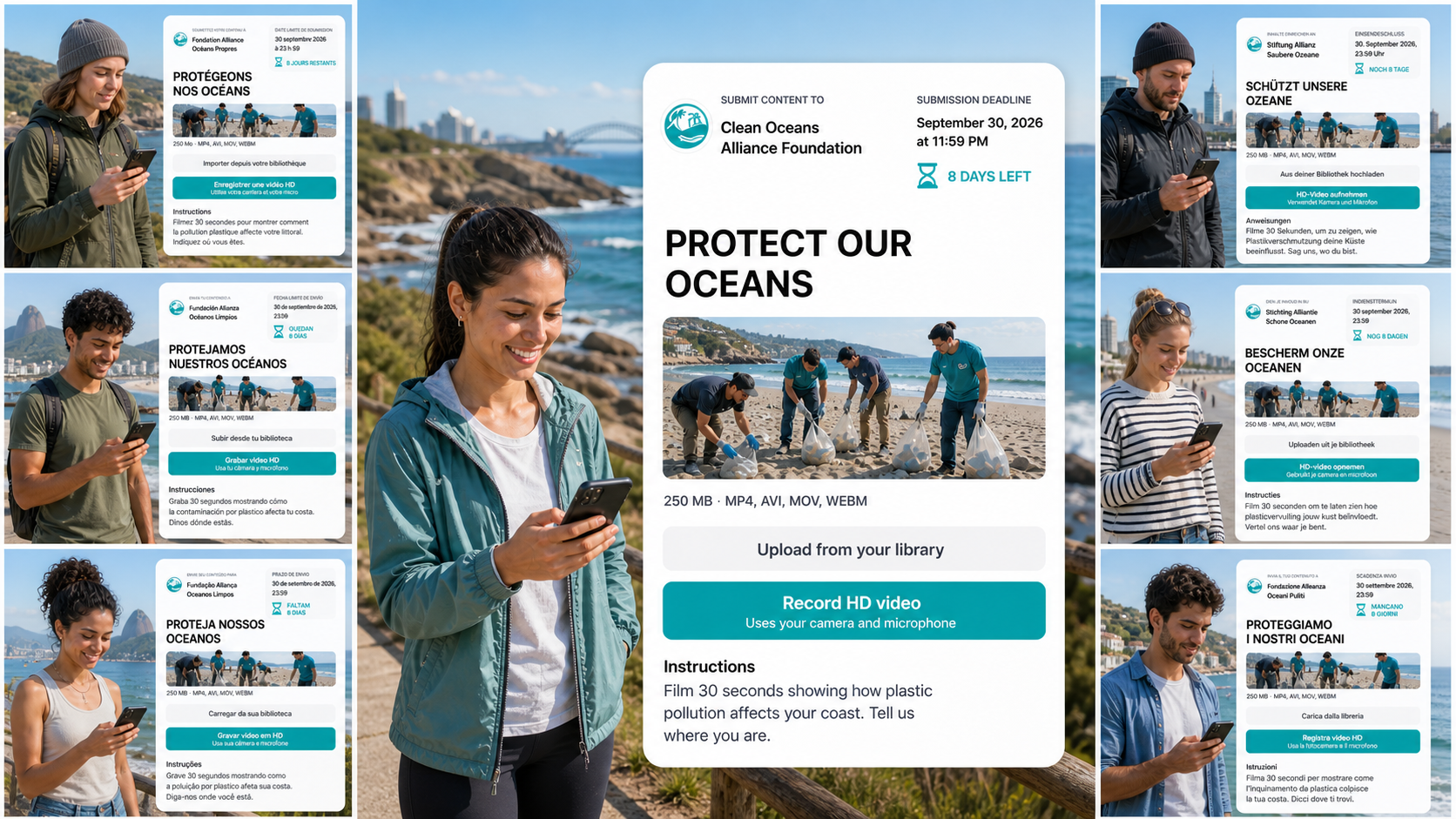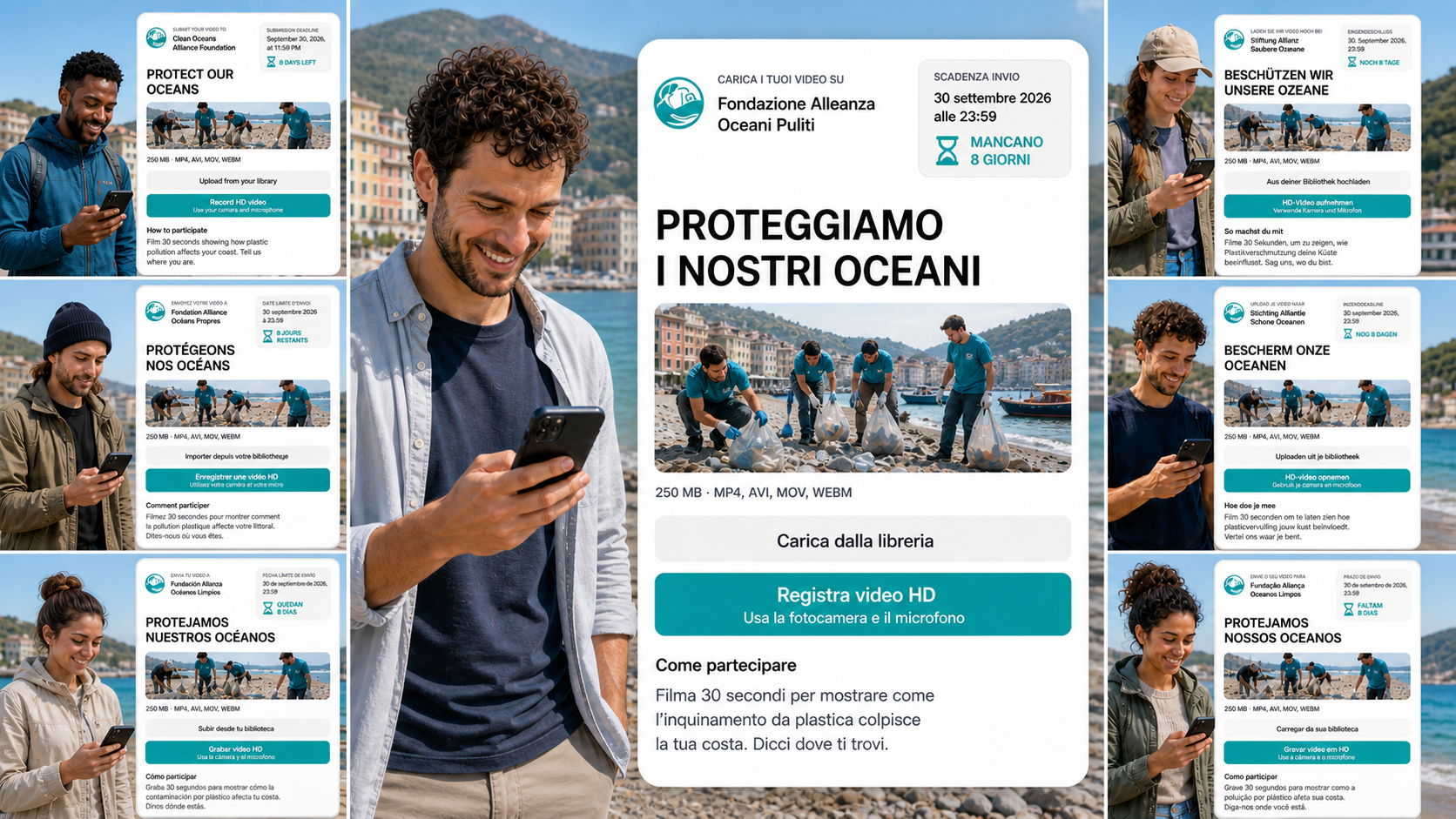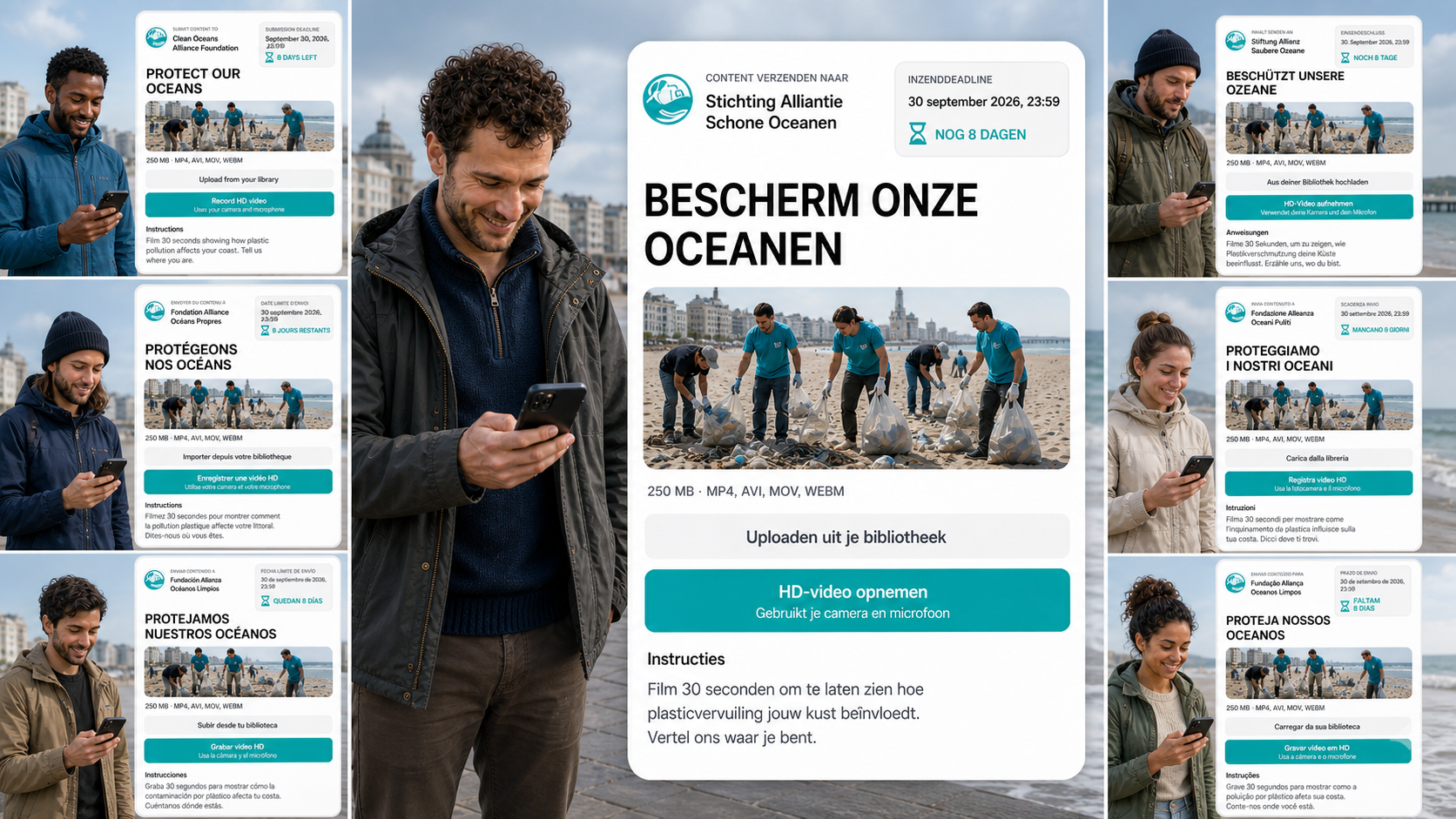

SYDNEY, 7 September 2026 — Vloggi today announced a patent-pending approach to strengthening the authenticity of human-generated video by bringing human participation, personal accountability and technology together.
Titled Binding Human Presence and Accountability Evidence to Digital Media, the patent application reflects a simple principle: establishing the authenticity of real video should not depend only on what software can infer from a finished file. The person behind the contribution, the actions they take and the responsibility they accept matter too.
Human-generated video starts with a person, not just a file
Sending an anonymous file is different from responding to a real request and putting your name to a contribution. Asking someone to explain what they are submitting, confirm their authority to share it and accept responsibility makes that participation deliberate and accountable.
“The approach recognises a practical feature of human behaviour- that a clear, personal commitment can discourage casual misrepresentation” explains Vloggi founder Justin Wastnage.
Most ordinary contributors do not treat an explicit statement of responsibility as meaningless. That commitment is not treated as proof on its own; it becomes more useful when it is connected to evidence of the person’s participation and the media they submit.
The algorithm invented by Wastnage now gives Vloggi users a rating 0-100 of the likelihood that a video was created by a human, rather than AI. rather than rely purely on technical specifications, human behavioir such as gestures, device data matching and response time are programmed into Vloggi Verify, which is also built into Vloggi’s category-defining video submission platform.
The aim is to give organizations certainty over the videos that they use for markting, compliance or even Know-Your-Customer workflows.
“In an age of fake AI video slop, we know companies value real human videos, be that for reviews or as evidence. we are working towards unfakeable videos and this patent goes a long way t protecting our intellectual property in this field,” Wastage adds.
Technology supports that human relationship by keeping the contribution, its context and the contributor’s accountable actions connected. The distinction is humans plus technology—not a detector making a judgment about pixels in isolation.
An anti-AI-fakery approach built around human participation
As AI-generated video becomes more convincing, organizations need more than content that looks real. They need a way to establish the human contribution behind it. Conventional file analysis starts with a completed piece of media. Vloggi’s proposed approach also considers the process that produced the contribution: a person receives a request, participates in a guided interaction and submits media with an associated record of responsibility.
For a business collecting customer stories, for example, the relationship begins with an invitation to share an experience. The customer’s response, permission and contribution belong together. Keeping them connected gives the receiving team a richer basis for trust than a video file detached from its creator and context.
The anti-AI principle is specific: resist synthetic content being passed off as an authentic human contribution. It is not opposition to useful AI tools or ordinary video editing. The aim is to make misattribution harder while making genuine participation straightforward, with evidence of origin and accountability rather than a claim that every statement made on camera is factually true.
Real video can be edited without losing its human story
A human-created video can be trimmed, captioned or assembled into a campaign without losing the value of the original contribution. The approach distinguishes the question of human origin from subsequent editing, helping organizations preserve the connection to the person and circumstances behind the source material.
This matters wherever people contribute video that someone else needs to use: customer testimonials, community campaigns, employee knowledge, research diaries and reports from the field. The common thread is not simply a file that looks convincing. It is a human contribution with context and accountability.
From fleeting content to lasting business assets
The filing advances Vloggi’s wider mission: mobile video should become a lasting business asset, not ephemeral content that disappears in a feed. A customer’s experience or an employee’s expertise becomes more valuable when the organization can find it, understand its origin and retain the permission needed to use it.
With Vloggi, consent is collected alongside every submission—so teams can stop chasing permissions and start using customer video. This people-first approach to video authenticity informs Vloggi Verify and the company’s continuing work to make human-generated video more trustworthy and useful.
Patent pending
Australian provisional patent application 2026907607, titled Binding Human Presence and Accountability Evidence to Digital Media, was filed on 7 September 2026. The application was filed by Vloggi founder Justin Wastnage and is intended to be assigned to Vloggi. Technical implementation details remain confidential.
About Vloggi
Vloggi helps organizations collect human-generated video and turn contributions from real people into useful business assets. Its platform brings video collection, contributor context and consent together, supporting campaigns and workflows built around customers, employees and communities. Learn more about founder Justin Wastnage and Vloggi’s history of video innovation.
Media enquiries
Brand Comms Bureau