
Home / Solutions / Applicant identity verification
Vloggi: add human-origin video to applicant identity verification.
APPLICANT IDENTITY VERIFICATION
Real answers. A stronger application record.
Add a private video conversation to your job, loan or scholarship application. Ask applicants to record fresh answers, keep the video connected to their application reference and return the Human-Origin Confidence Score (HOCS) through your configured webhook workflow.
Give reviewers first-person responses and supporting capture evidence alongside the written form—a human-origin evidence layer for your existing identity checks and review process.

THE PROBLEM
A polished application does not tell you who is behind it.
AI can help anyone produce fluent text. That can be useful—but the written form alone gives your team little evidence of who participated or how the applicant explains their own experience. Scheduling a live call for every application creates another bottleneck.
THE SOLUTION
Bring a real response into the process.
Keep the form that already works. Add relevant, on-screen video questions and collect new device-camera responses. Connect the answers, contributor declarations and available origin evidence to the same application record, ready for your team to review.
THE WORKFLOW
Your form. A human response. One connected record.
01
Connect the application.
Carry an opaque application reference into a prefilled video step. Tell applicants why you are collecting video, who can access it and how it fits into the application.
02
Ask for fresh answers.
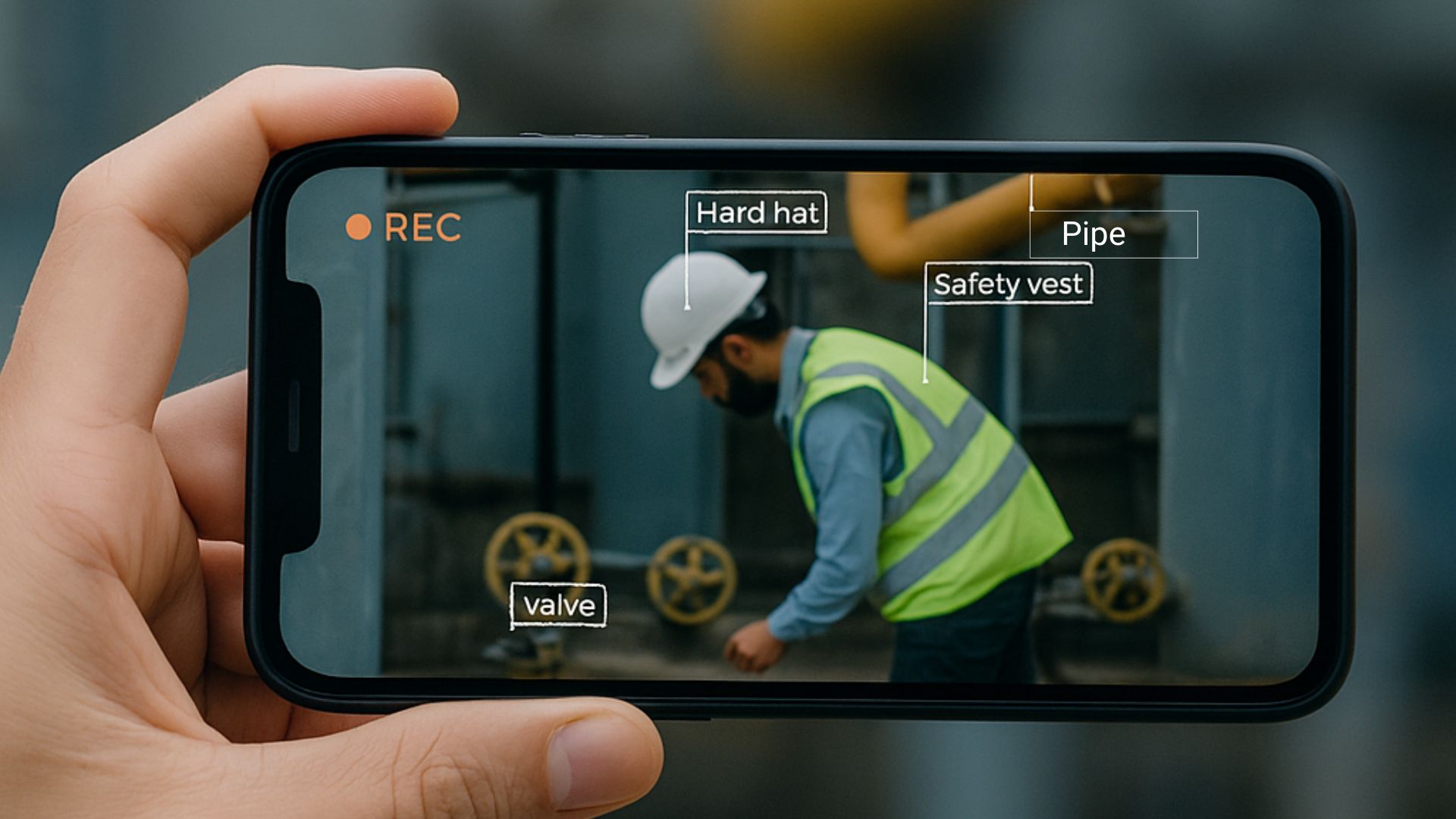
Use two to eight questions in Vloggi Conversations. Applicants record a separate device-camera answer to each prompt; your project controls required and optional responses.
03
Return the evidence.
Configure the webhook handoff to send the HOCS score back against the application reference. Give authorized reviewers access to the linked response and assessment evidence.
FROM APPLICATION TO CONVERSATION
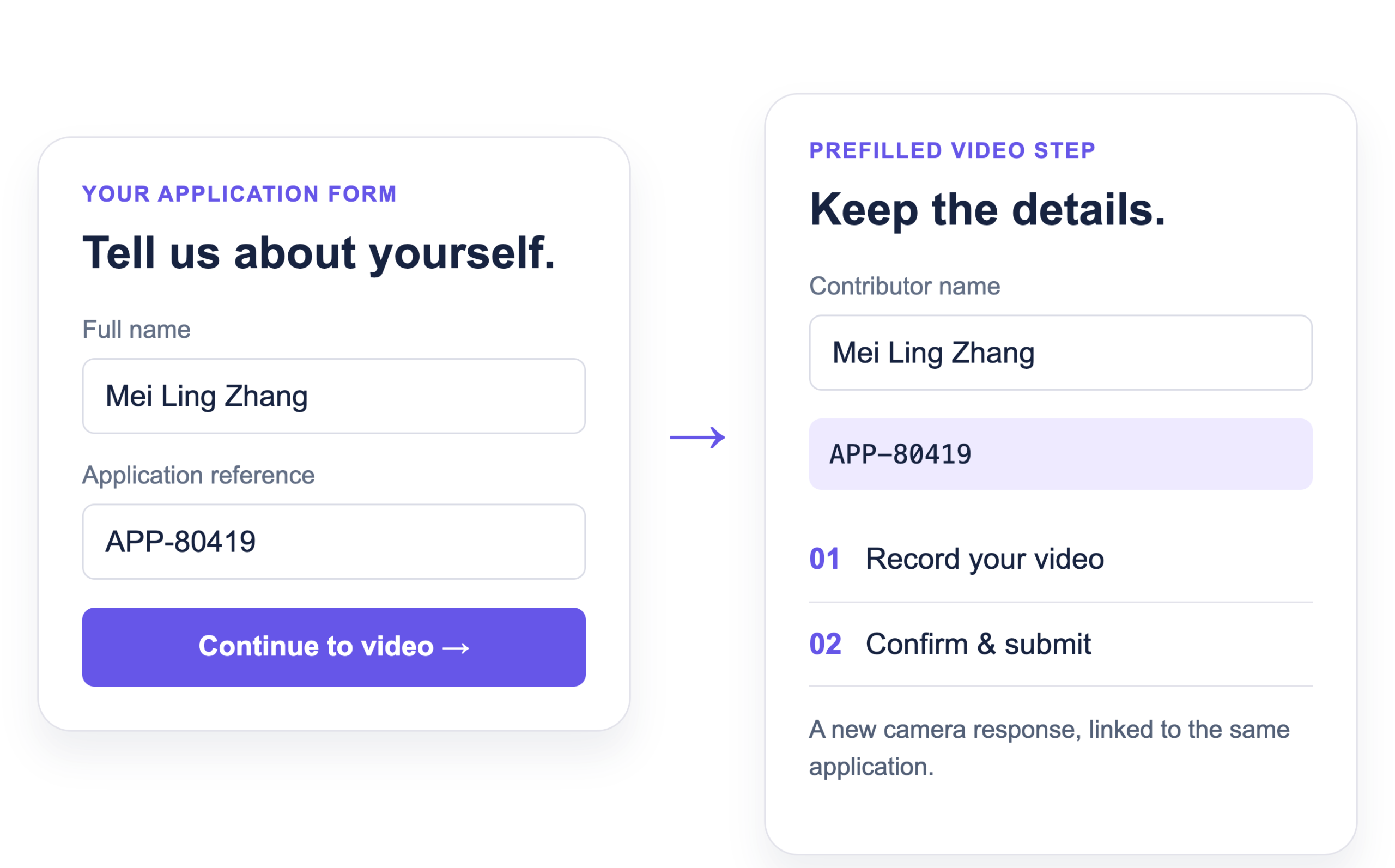
Go beyond the text box.
Ask questions that need a first-person explanation: a project the applicant is proud of, how they approached a challenge, or what they hope to achieve through the program. Collect their answer without arranging a simultaneous interview.
The video step can sit within a connected application journey, using an embedded experience or a branded link and return flow configured for your integration. Conversations uses fresh recordings—not camera-roll uploads.
FROM CAPTURE TO YOUR SYSTEM
Return a score with a record—not another loose video file.
HOCS summarizes how strongly the available evidence supports human participation in the capture process. It is an evidence score from 0 to 100, not a percentage probability that an applicant is genuine.
Connect the score to your application workflow through a configured webhook. Keep the application and submission references available so reviewers can trace the result back to the corresponding video and assessment.
Set up the receiving system, access permissions and return journey with your team. The score supports review; it does not automatically approve a job, loan or scholarship application.
APP-80419
Application record
Your form and existing identity checks
APP-80419
Video + human-origin evidence
Prompted responses · submission reference
HOCS score · supporting assessment
APP-80419
Back to your workflow
Attach the result to the matching application
Ready for authorized human review
PUT IT TO WORK
One video step. Three practical application workflows.
Jobs and candidate applications
Invite candidates to explain relevant experience in their own words. Keep answers private to the recruiting team and alongside the existing applicant record.
Banking and lending applications
Add a prompted video response and human-origin evidence to a financial-services onboarding journey, alongside—not instead of—your established KYC, identity and lending checks.
Scholarships and program admissions
Let applicants explain their motivation or a project without relying only on polished written statements. Connect the response to the right application for the review panel.
PRIVATE BY DESIGN OF YOUR WORKFLOW
Collect only what your reviewers need.
Use a private project rather than a public gallery. Explain the purpose of recording, collect the relevant declarations, control reviewer access and agree retention and deletion arrangements before inviting applicants. Use an opaque application reference instead of putting sensitive application details into a public link.
Offer an accessible alternative where video is not appropriate. Evaluate answers against relevant criteria—not appearance, accent or the HOCS score alone.
RELATED CUSTOMER WORKFLOWS
Structured video collection. Two practical workflows.
NESA
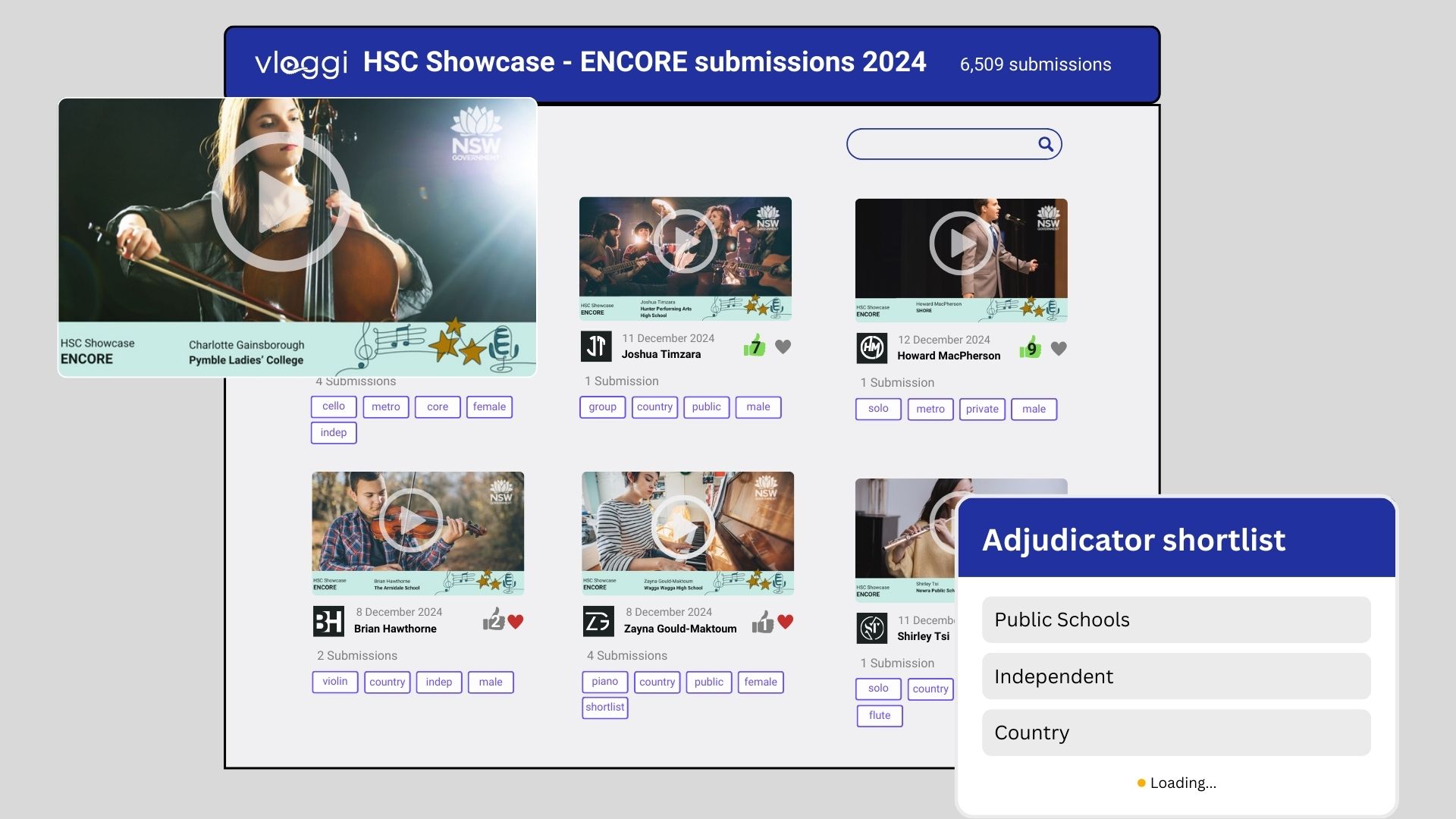
NESA collects student performance videos for its HSC Showcase selection workflow, organizing submissions for adjudicator review. It demonstrates structured applicant-video collection and review, rather than a legal-identity check.

An international school in Hong Kong
An international school in Hong Kong wanted direct student and parent responses alongside written applications. Planned for 2027, its workflow combines video questions, private review, transcripts and completion webhooks, with optional transcript-based sentiment analysis.
CONNECTED FEATURES
Build on the tools already in Vloggi.
Keep the application system you use today. Connect video collection, relevant context, permissions and origin evidence to the team responsible for the final decision.
Explore Vloggi Conversations →Explore Vloggi Context →Explore Vloggi Consent →Explore Vloggi Confirm →Explore Vloggi Connect →
RELATED INDUSTRIES
Bring human responses into your sector.


Applicant video verification FAQs
Does HOCS prove an applicant’s legal identity?
No. HOCS assesses evidence of human participation in video capture; it does not establish that the person is the owner of a claimed legal identity, or that their answers are true. Formal identity proofing links a person to validated identity evidence. Use Vloggi alongside your existing identity checks. Read NIST’s identity-proofing overview.
Can Vloggi support KYC or a banking application?
Yes, as a configured video-response and human-origin evidence layer in the application journey. It does not replace document validation, identity matching, screening or the other checks your regulated process requires. Agree the integration and review process with your team.
How do we receive the HOCS score?
Configure a webhook handoff to your receiving application system and map the result to the same application reference. Agree the payload fields, assessment availability, access controls and handling of incomplete assessments as part of the integration. The diagram above explains the relationship; it is not an API schema.
Can applicants upload a prerecorded answer?
Not in Conversations. Each prompt requires a new device-camera recording. This distinction matters when capture evidence is part of your application process.
Does a fresh recording mean the answer was not prepared with AI?
No. A person can prepare a script with AI and still record it themselves. Video and HOCS add a first-person response and capture evidence; they do not prove an answer is spontaneous, independently authored or factually correct.
Should a score decide whether an applicant is accepted?
No. Treat HOCS as evidence about the capture process, not a measure of suitability, creditworthiness, honesty or merit. Keep consequential decisions with appropriately authorized reviewers and provide a way to resolve missing or inconclusive evidence.
Can we keep applicant videos private?
Use a private collection and review workflow with appropriate access permissions, notices and retention arrangements. Do not enable a public gallery for sensitive applications. Provide a suitable alternative for applicants who cannot use the video step.
Bring a human response into your next application.
Connect the form, the video and the supporting evidence—without creating another disconnected review queue.